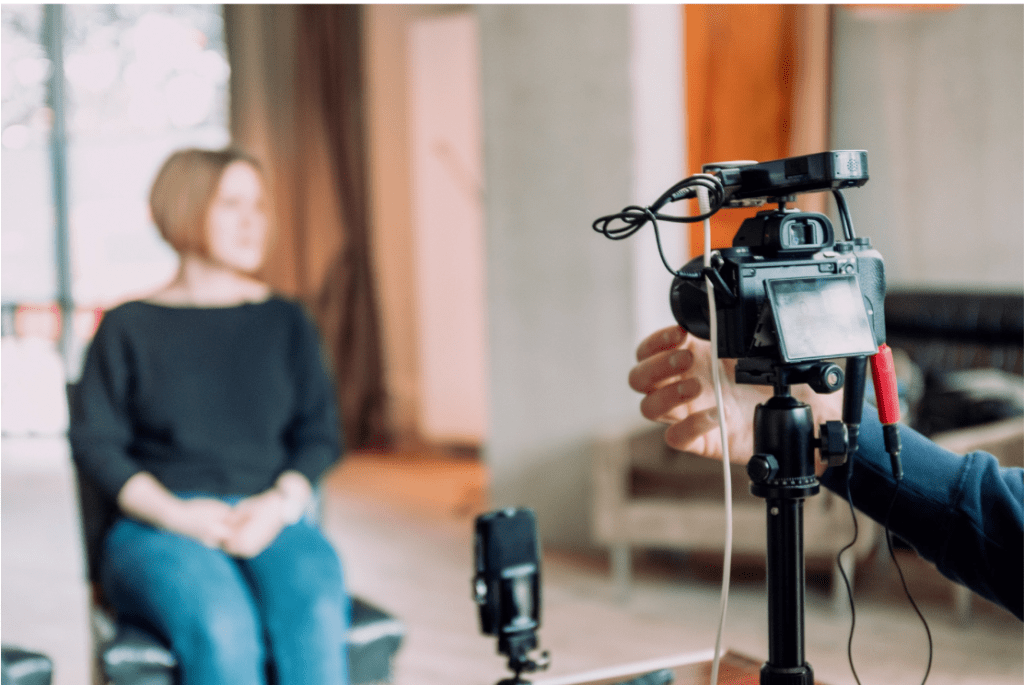
When it comes to creating something visually appealing, understanding the basics of filmmaking is essential. Whether you’re a beginner or just looking to refresh your knowledge, learning about things like camera shots, composition, and pre-production planning can really take your work to the next level.
Readings and Writings
The Bare Bones Camera Course for Film and Video:
Chapter One – Basics
In chapter one of The Bare Bones Camera Course for Film and Video by Tom Schroeppel, an overview is provided regarding the core components of using a camera effectively. It introduces the three main elements you’ll need to understand for a quality shot: aperture, shutter speed, and film speed. Schroeppel explains how each affects light and exposure, making sure to cover why they’re important and how to balance them for different lighting conditions. There’s a focus on keeping things simple—knowing what these controls do helps avoid overthinking when actually shooting.
Chapter Two – Composition
Here, Schroeppel dives into framing and how to make shots visually appealing and clear. He explains concepts like the Rule of Thirds, which can help balance your shot by aligning subjects along lines on a grid. He also emphasizes the importance of background elements and how they affect what viewers notice in a shot. Overall, composition is about making the shot look “right” by guiding the viewer’s eye and ensuring that all elements work together without distraction.
Chapter Five – Camera Moves
This chapter introduces the impact of camera movement, discussing various techniques like panning, tilting, and dollying. Schroeppel explains how each movement adds emotion or meaning to a scene, like how a slow dolly in might create suspense. Each technique has its own effect, so this chapter highlights when and why to use different moves rather than just using them for the sake of action.
Chapter Six – Montages
Montages are about combining shots to create a story or show time passing. Schroeppel describes how montages can condense a lot of information into a short sequence. He explains the importance of matching images so that viewers can easily follow along. By focusing on the rhythm and pacing of cuts, this chapter shows how editing can convey ideas without words, whether to create tension or show a character’s journey.
Video Pre-Production Planning Check-List – 11 Steps to a Successful Project:
The article Video Pre-Production Planning Check-List – 11 Steps to a Successful Project by Jimm Fox, emphasizes the importance of planning before starting a video production project. Too often, projects begin with a vague “cool idea” and lack clear objectives or strategies for reaching the target audience. Without a thorough plan, the video project may fail to deliver value.
Fox highlights the importance of a pre-production checklist with steps such as identifying the business objective, narrowing down the target audience, setting a realistic budget, developing key messages, creating a creative brief, and finalizing the concept. Each step ensures that the video has a purpose, resonates with viewers, and aligns with the company’s goals.
Additionally, the article stresses the need for a well-thought-out storyboard, understanding the distribution strategy, determining video length, and having a direct approval process. Following these steps can help companies produce effective videos that engage audiences and support their broader marketing objectives.
How to Make a Storyboard for Video:
In Amanda Athuraliya’s article How to Make a Storyboard for Video, she discusses how storyboarding is all about planning shots before filming. Athuraliya explains how storyboarding helps organize scenes, visualize camera angles, and prepare for smoother production.
It breaks down the process step-by-step, from understanding your story’s flow to sketching each shot’s setup and details. Storyboards help everyone involved understand the visual plan, saving time and resources. It’s a useful tool for avoiding guesswork during shooting, especially if you have complex scenes.
12 Most Popular Camera Shots:
The article 12 Most Popular Camera Shots by NYFA, introduces different camera shots and why they’re important. It covers common shots like the close-up, medium shot, and wide shot, each serving a unique role.
For example, a close-up helps focus on a character’s emotions, while a wide shot can show the whole setting. The article gives a rundown of shots every actor (and filmmaker) should know, from an over-the-shoulder shot to a high-angle shot, which is useful for deciding how to portray different moods and situations.
Each of these shots brings a specific visual effect or mood to a scene, helping filmmakers shape how audiences feel about what they’re seeing. By understanding these basics, you can start to see how every choice in framing and positioning affects the story’s impact.
Research to Inform
The Avengers (2012) – Rule of Thirds (1:18-1:31)
In The Avengers, the rule of thirds is used effectively in the iconic “hero shot” that pans around the team as they prepare for battle in New York. Each character is positioned along the imaginary grid lines, creating a balanced and dynamic composition. This technique highlights each hero individually while still showing them as part of a team. The effect gives viewers a sense of unity and power, emphasizing that they’re stronger together.
The Shining (1980) – Leading Lines (1:50-1:58)
In Stanley Kubrick’s The Shining, the scene where young Danny rides his tricycle through the hotel’s long hallways is a great example of leading lines. The carpet pattern and corridor design guide the viewer’s eyes down the hallway, creating tension as we follow Danny’s journey through this unsettling space. The leading lines add to the scene’s eerie atmosphere, hinting that something is just around the corner.
1917 (2019) – Deep Focus (0:20-0:50)
In 1917, deep focus is used throughout to keep both the characters and their surroundings in sharp detail, especially in the continuous-shot style that the film employs. For example, during scenes in the trenches, the background soldiers, mud, and debris are clearly visible alongside the main characters. This deep focus gives a sense of inclusion, making viewers feel the claustrophobia, tension, and chaos of World War I.
Create
Scavenger Hunt
Recently, I was tasked with participating in a scavenger hunt where I took specific photos that allowed me to practice my camera shot and angle abilities. This helped me think more critically about how I compose shots and how different camera angles can completely change the feel of an image.
Some of the guidelines, like leading lines, were harder to demonstrate because I had to work with nature and the environment around me, which didn’t always have the perfect lines to guide the viewer’s eye. It took some creativity to find paths or features in the landscape that could serve that purpose.
On the other hand, shallow depth of field was much easier to implement and ended up being my favorite technique. It allowed me to focus sharply on a subject while blurring out the background. It made the photos feel more intimate and drew attention exactly where I wanted it, creating a sense of calm and focus that worked perfectly with the fall atmosphere I was trying to capture.
Pre-Production Planning – Montage
When tasked with creating my own Montage, I knew I wanted to capture the essence of fall. Autumn has this beautiful, nostalgic feeling, and I wanted to create something that celebrates the cozy moments, the transformation of nature, and that quiet shift we feel as the season changes. Fall happens to be my favorite season and the season that I can recall the most memories from whether that was playing outside with my dog or enjoying a fire.
So, I chose to focus on simple, serene scenes: the colorful fall foliage, a cozy fire crackling in the hearth, and the sound of leaves crunching underfoot. I used Robert Frost’s poem “Nothing Gold Can Stay” to narrate the montage, bringing in a timeless reflection on the fleeting nature of beauty and time.
The challenge was to capture that balance between the vibrant energy of fall and the peaceful, reflective moments. Creating storyboards for my montage helped me organize different shots, and figure out the angles, lighting, and pacing of each scene—like using a low-angle shot of a dog running through the yard or a wide shot of the sun setting over a farm. My goal was to transport viewers to a place where they could not only see fall but feel it, so that when the montage ends, they get a sense of how fall makes me feel.
By understanding the fundamentals of camera settings, composition, and storytelling techniques, you’re setting yourself up for success in video production. Whether it’s getting the perfect shot with the rule of thirds, planning your video’s flow with a storyboard, or carefully considering every pre-production step, these strategies will make sure that your video projects come to life exactly as you envision them.
View my pre-production work below:
References
Athuraliya, A. (2022, November 24). Learn what is a storyboard and how to use it to make better videos. Creately. https://creately.com/guides/how-to-make-a-storyboard-for-video/
Fox, J. (n.d.). Video Pre-Production Planning Check-list – 11 Steps to A Successful Project – Marketing with Video and Rich Media Blog . One Market Media.
Nyfa. (2022, November 16). Acting tips: 12 camera shots every actor should know. NYFA. https://www.nyfa.edu/student-resources/12-most-popular-camera-shots-actors-should-know/
Schroeppel, T. (2018). The Bare Bones Camera Course for film and video.
 Nicole Calabrese's Blog
Leave a comment