
Have you ever watched a movie and felt sucked into the story without even noticing how the camera moves or switches between shots? That’s no accident—filmmakers use specific techniques to guide us through the action while keeping things smooth and natural.
From a close-up zooming in on an intense moment, or clever tricks to keep screen direction consistent, these tools are like the secret ingredient of good filmmaking. Let’s see how these techniques work and explore some great examples (and an oops moment) from movies and shows we all know and love.
Readings and Writings
Chapter Three – Basic Sequence
Chapter Three of The Bare Bones Camera Course for Film and Video by Tom Schroeppel, focuses on creating sequences of shots to tell a story. A sequence typically starts with an establishing shot, which sets the scene and provides the audience with context about the location and environment. This is followed by medium shots that focus on characters or actions, and then close-ups that highlight details or emotions. Each type of shot serves a purpose, guiding the audience through the story step by step.
For example, imagine filming a soccer game: the sequence could start with a wide shot of the entire field to show the game’s context. Then, it moves to a medium shot of a player dribbling the ball toward the goal. Lastly, a close-up could focus on the ball hitting the net for a dramatic finish. The key is to transition smoothly between shots so that the story flows naturally without confusing the viewer.
Chapter Four – Screen Direction
Chapter Four of Schroeppel’s book is all about keeping things consistent on screen so the audience doesn’t get confused. A big rule here is the 180-degree rule. Imagine an invisible line between two characters talking. If one is on the left and the other is on the right, the camera needs to stay on one side of that line. If it crosses over, it can look like the characters swapped sides, which can be pretty jarring for viewers.
Another tip is match on action, like if a wide shot shows someone starting to open a door, the next shot might zoom in on their hand turning the knob. It keeps the action feeling smooth and connected. Then there’s eyeline matching, which helps when a character looks at something off-screen. For example, if they glance toward a creaking door, the next shot should show the door from the right angle, so it makes sense. These little details help everything flow and keep the audience immersed in the story.
Research to Inform
Videos Demonstrating Smooth Continuity
“Barbie” (2023) – Dance Party Scene
In the “Barbie” movie, there’s a vibrant dance party scene that starts with a wide shot showcasing the entire dance floor, filled with characters enjoying the music. The camera then cuts to close-ups of Barbie and Ken dancing, highlighting their expressions and movements. This back-and-forth between wide and close-up shots keeps the energy high and involves the audience in the celebration.
“Spider-Man: Homecoming” (2017) – Washington Monument Rescue
During the Washington Monument rescue scene, the sequence begins with a wide shot of the monument, establishing the height and danger. As Spider-Man climbs, the film cuts to close-ups of his determined face and hands gripping the structure. These transitions build tension and give viewers a personal connection to his risky climb.
“Beetlejuice” (1988) – Dinner Party Possession
In the iconic dinner party scene, it starts with a wide shot of the guests seated around the table. As the possession begins, the camera cuts to close-ups of individual reactions, capturing their surprise and confusion. This interaction between wide and close-up shots enhances the comedic and eerie atmosphere of the scene.
Example of a Continuity Error
Continuity errors occur when something in a scene doesn’t match the established time, setting, or context, and the Starbucks coffee cup is a perfect example. It appeared in a scene during Season 8, Episode 4, where characters are sitting in Winterfell—a medieval fantasy setting where modern items like Starbucks cups clearly don’t belong.
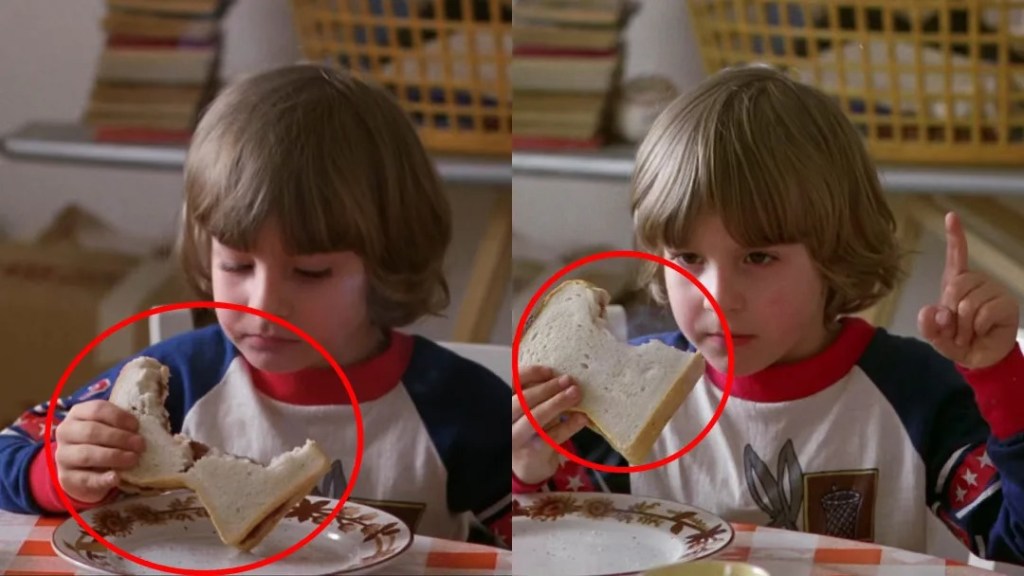
This kind of mistake breaks the immersion for viewers because it draws attention away from the story and reminds them they’re watching a production. It’s a different kind of continuity issue compared to a character’s clothes changing or an object swapping hands between shots, but it still disrupts the believability of the world being portrayed.
When filmmakers nail smooth continuity and screen direction, we don’t even think about it—we’re just absorbed in the story. But when something’s off, like a random Starbucks cup in a fantasy world, it can totally throw us out of the moment. So next time you watch a movie, keep an eye out for these tricks—you’ll have a whole new appreciation for how much thought goes into every single shot!
Create
Recently, I was given the task of creating a “How To” tutorial, and I chose a nostalgic favorite: drawing the iconic “S” symbol. Back in high school, everyone seemed to doodle it, but figuring out how to draw it was a bit tricky. I thought it’d be fun to share my favorite doodle and help others learn how to make it too.
To make the video engaging, I included upbeat background music, smooth transitions like cross dissolves, and filmed from three different camera angles. I focused on continuity, ensuring that my movements stayed consistent across all shots and always flowed in the same direction, no matter the angle. This attention to detail helped everything feel seamless while keeping viewers focused on the steps. It was a fun way to revisit a simple yet iconic piece of nostalgia!
View my work below:
References
Schroeppel, T. (2018). The Bare Bones Camera Course for film and video.
 Nicole Calabrese's Blog
Leave a comment