

The holiday season wouldn’t be the same without seeing a performance of The Nutcracker. The King Centre for the Performing Arts, showed their audience that the magic of the holidays start well before the first act. It’s in the busy backstage moments, the anticipation that fills the halls, and the careful preparation that makes everything come alive. From racks of colorful costumes waiting to be danced into the excited buzz before the show begins, every detail plays a part in creating this holiday tradition. It’s a story of hard work, excitement, and a little bit of backstage magic that makes the performance unforgettable.

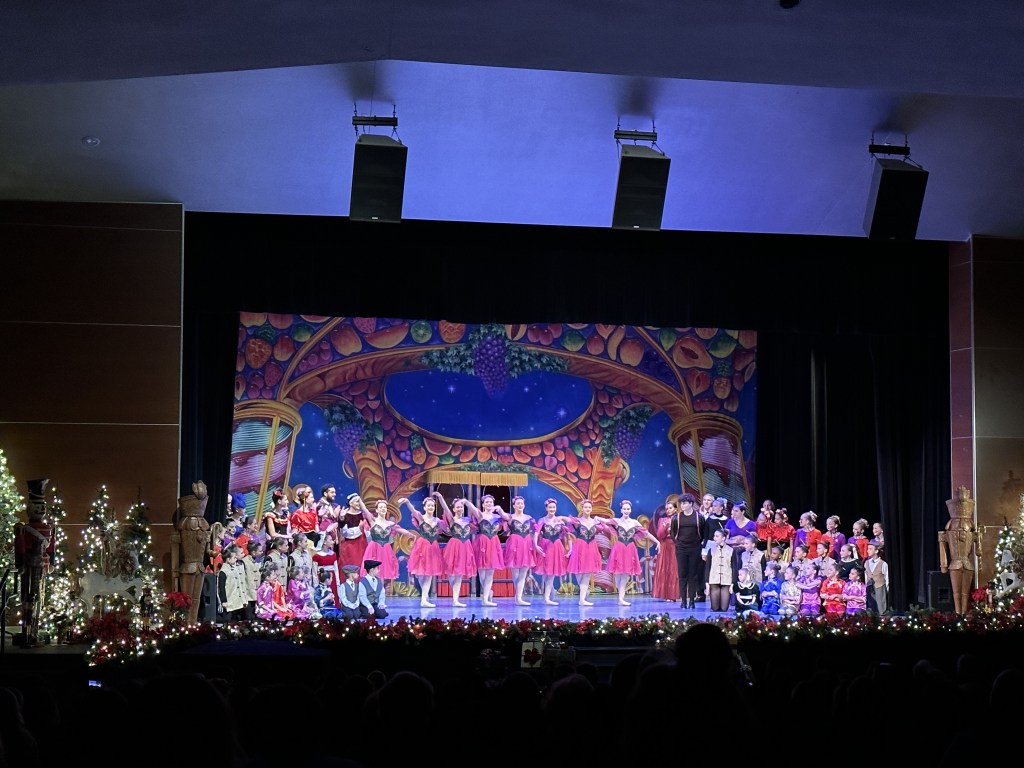
As the performers take their final bow and the audience cheers, the magic of The Nutcracker feels complete. But it’s not just the show itself that makes it special—it’s everything that happens behind the scenes. The laughter, the teamwork, and the little moments backstage are just as important as the scenes on stage. This isn’t just a performance; it’s a tradition filled with memories that stick with everyone involved, whether they’re in the audience, on the stage, or working behind the curtain.
The Creative Process Behind the Story
Rationale
The goal of my photo essay was to capture the story behind the magic of The Nutcracker—a production filled with both tradition and emotion. By focusing on the behind-the-scenes and on-stage moments at The King Centre for the Performing Arts, I wanted to show how every element, from preparation to performance, contributes to this holiday tradition. I aimed to create a narrative that gives readers a sense of warmth, nostalgia, and the feeling of a shared community, inviting them into the world of dance and theater.
Categorization and Analyzation
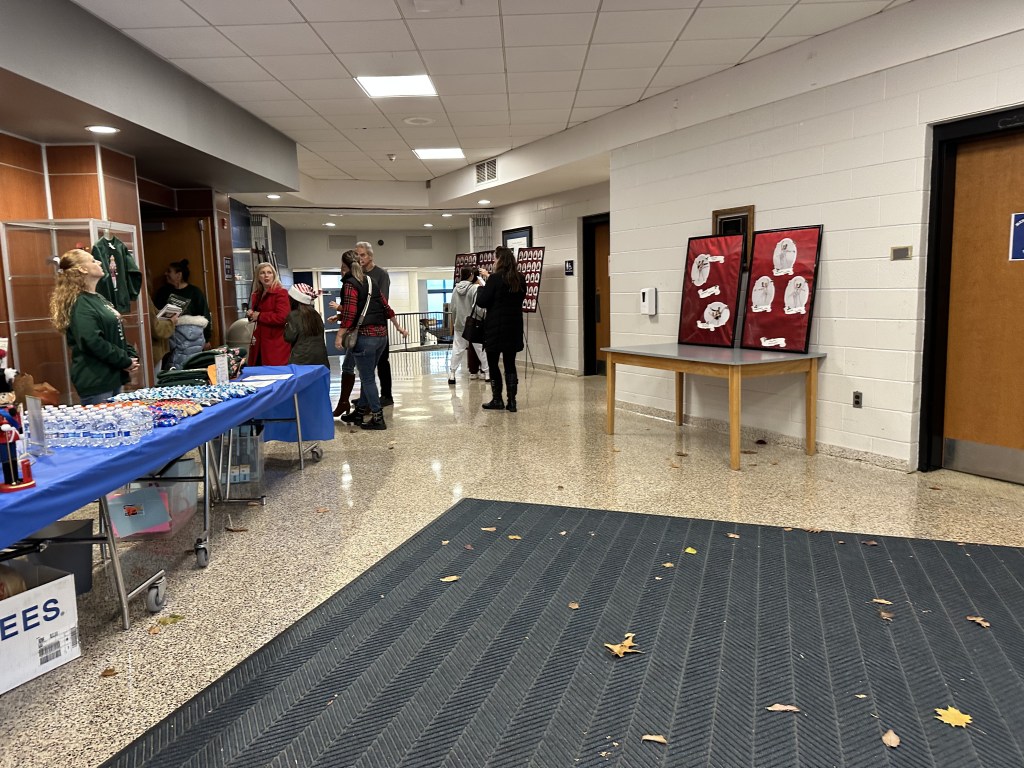
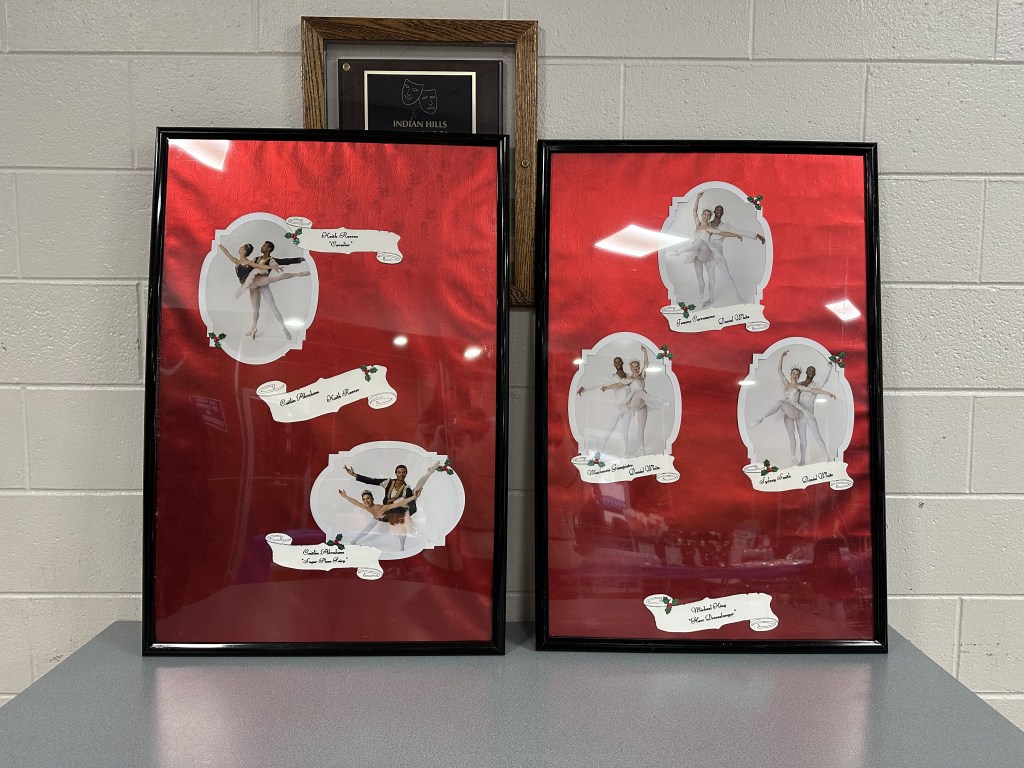
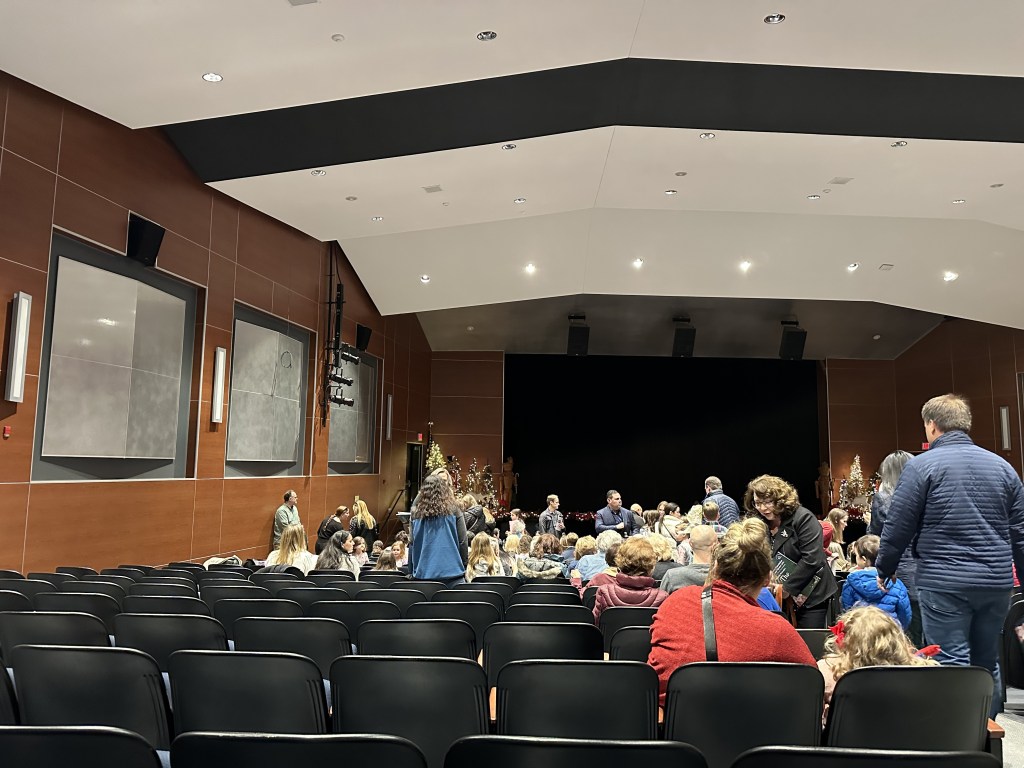
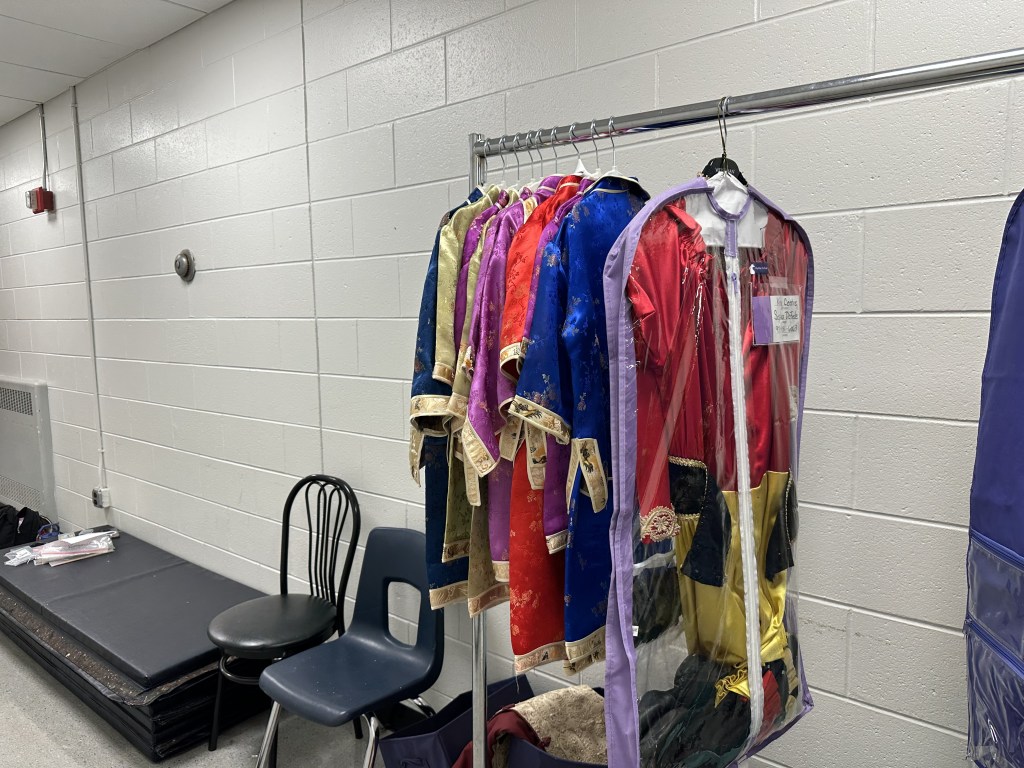
The images I selected can be categorized into two themes: preparation and performance. The preparation category includes shots like costumes on a garment rack, the table of goodies, the hall where people gather, and the cast boards. These highlight the effort and organization needed to bring the production to life.
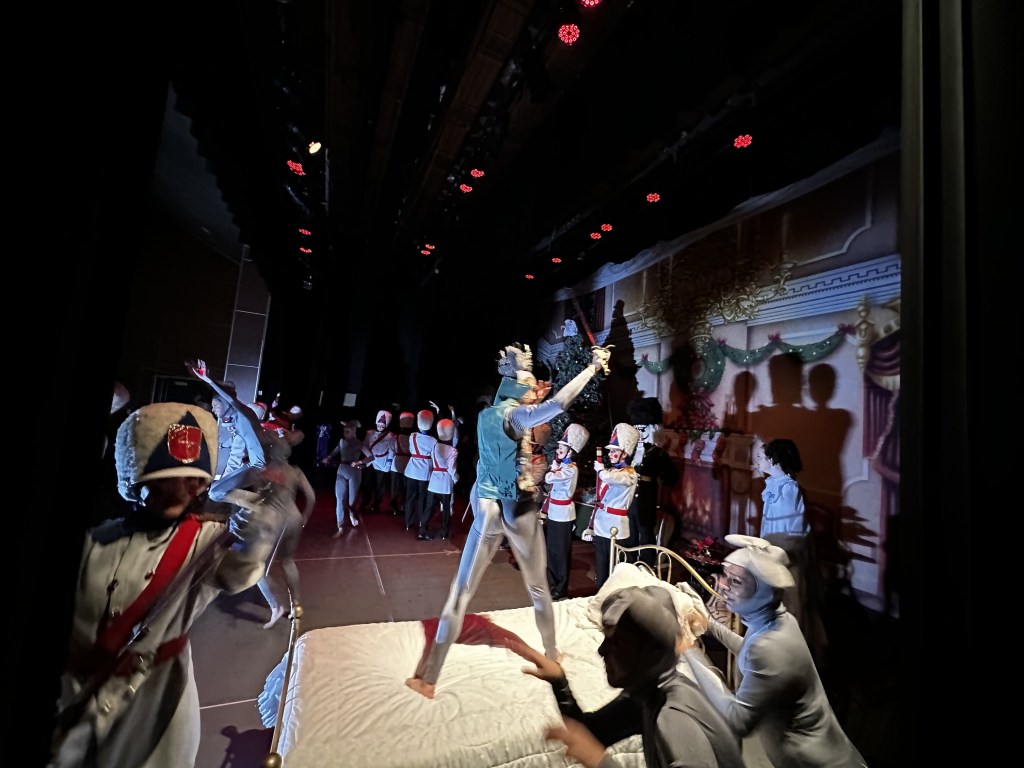
The performance section focuses on moments of storytelling on stage, such as the very important scene where the Nutcracker and Mouse King face off, with its sense of depth and movement. This theme also captures the curtain call finale, emphasizing joy and pride.
Design Principles and Techniques
Visual Storytelling Principles
According to The Four Principles of Visual Storytelling by Mike Montalto, strong storytelling involves authenticity, sensory appeal, relevance, and archetypes. My images are authentic, showing candid backstage moments and unposed interactions. The sensory appeal comes through in textures, like the softness of costumes and the warm lighting of the stage. Each photo connects to the archetype of a journey, with The Nutcracker symbolizing a passage from preparation to fulfillment.
Plutchik’s Wheel of Emotions
Using Plutchik’s framework discussed in Putting Some Emotion into Your Design – Plutchik’s Wheel of Emotions by Interaction Design Foundation, I aimed to evoke emotions like joy, anticipation, and admiration. The shot of The Nutcracker fighting the Mouse King conveys anticipation through dramatic lighting and layered depth. Meanwhile, the curtain call finale captures joy with its bright lights and smiling performers, leaving viewers with a sense of celebration.
Depth Cues
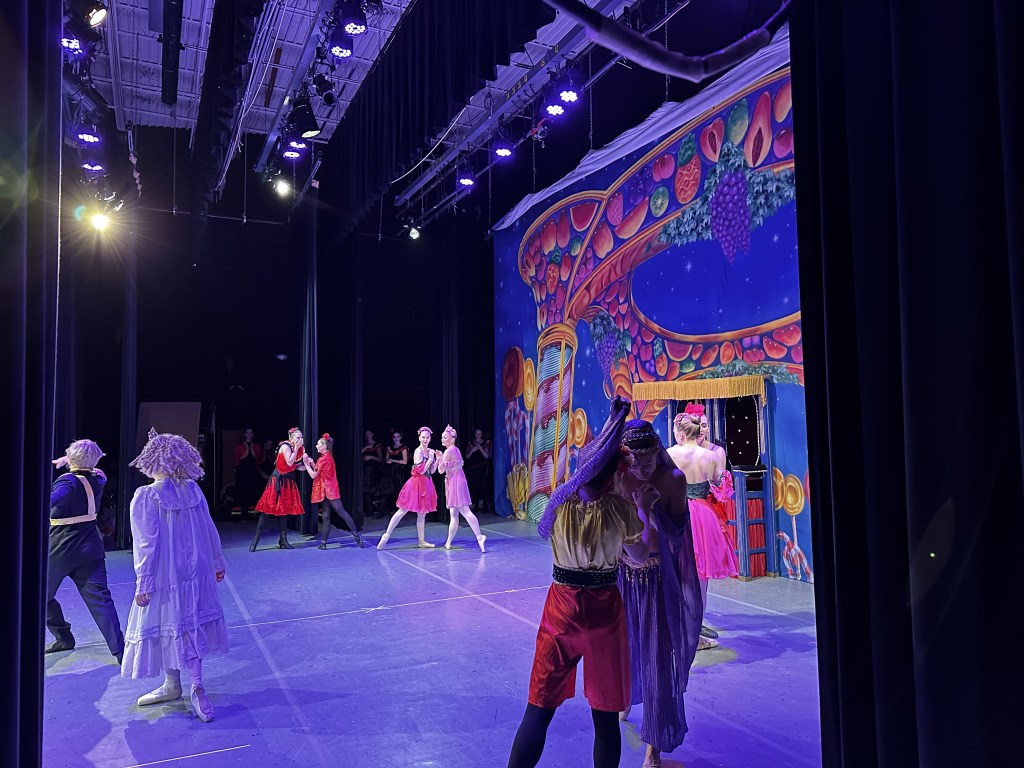
As explained in the Northern Michigan University’s Depth Cues resource, I used techniques like overlapping, size variation, and perspective to add dimension. The backstage shot of the garment rack shows costumes layered in the frame, drawing the viewer’s eye through the scene. The behind-the-curtain shot during the performance uses atmospheric perspective, with characters closer to the lens appearing sharper, while those further away blend softly into the stage’s depth.
Gestalt Principles
Pulling from Carolann Bonner’s article Using Gestalt Principles for Natural Interactions, Gestalt principles like proximity and continuity played a role in structuring my images. For example, the photo of the concession stand, with nutcrackers and roses neatly grouped, creates visual order and balance. Continuity is evident in the way costumes are arranged on the rack, leading the eye naturally through the frame.
Perception Theories
Drawing from Saul McLeod’s overview in Visual Perception Theory In Psychology, I considered the viewers’ perceptual expectations. For instance, the layout of the curtain call shot and auditorium shot creates a feeling of harmony and grandeur, aligning with what the audience might expect from a theater setting.
Photo Narratives
Inspired by the article Photo Narratives by Eman Shurbaji, I ensured each image stood alone as a strong visual while contributing to the larger story. The image of the cast board, for example, tells a story about the individuals behind the production, giving context to the larger narrative of The Nutcracker.
Solutions-Focused Visual Reporting
Finally, I adopted a solutions-focused approach as described in How to Do Better Visual Journalism for Solutions Stories by Nicole Dahmen, highlighting the efforts and teamwork behind the production. Instead of merely presenting The Nutcracker as a typical production, my images reveal the collaboration and preparation that make it possible, offering viewers a new perspective on a familiar story.
To achieve these results, I experimented with angles and lighting. Backstage images relied on warm, natural lighting, and exposure to evoke a sense of comfort and human connection. I also used a mix of wide shots to show the overall atmosphere and close-ups to focus on details like the intricacy of costumes or goods being offered to the performers.
Overall
This photo essay was not just about documenting a production but about telling a story that resonates on multiple levels. By combining preparation and performance, I aimed to show the depth and emotion that go into creating The Nutcracker. Drawing on design principles and storytelling techniques, I created a narrative that is visually compelling and emotionally engaging, leaving the viewer with a deeper appreciation for the magic of this performance.
References
Bonner , C. (2019, March 23). Using gestalt principles for natural interactions. thoughtbot. https://thoughtbot.com/blog/gestalt-principles (Module 4)
Dahmen, N. (2017, December 2). How to do Better Visual journalism for solutions stories. MediaShift. https://mediashift.org/2017/11/visually-reporting-solutions-stories-newsrooms-classrooms/ (Module 5)
Interaction Design Foundation. (2024, December 1). Putting some emotion into your design – plutchik’s wheel of emotions. The Interaction Design Foundation. https://www.interaction-design.org/literature/article/putting-some-emotion-into-your-design-plutchik-s-wheel-of-emotions (Module 3)
McLeod, S. (2023, June 16). Visual perception theory in psychology. Simply Psychology. https://www.simplypsychology.org/perception-theories.html (Module 4)
Montalto, M. (2024, January 25). The four principles of visual storytelling. amplifi. https://amplifinp.com/blog/4-principles-visual-storytelling/ (Module 1)
Northern Michigan University. (n.d.). Depth Cues. Linear_perspective [Art & Design Foundations]. http://artnet.nmu.edu/foundations/doku.php?id=linear_perspective (Module 4)
Shurbaji, E. (2014, December 17). Photo narratives. Medium. https://medium.com/learning-journalism-tech/photo-narratives-d77b812f99dd (Module 5)
 Nicole Calabrese's Blog
Leave a comment