
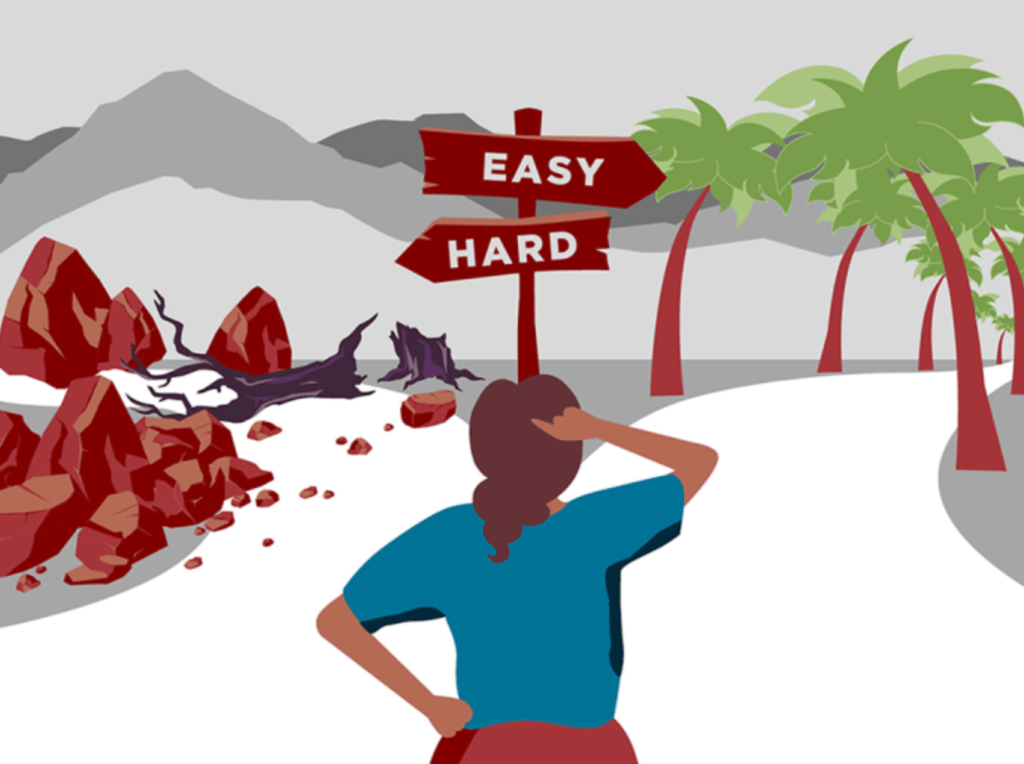
Have you ever wondered why signing up for a free trial is so easy, but canceling feels like a maze? Or when big red “SALE” tags make you feel like you’re getting an amazing deal? That’s called behavioral economics.
Behavioral economics, the study of how psychological, social, and emotional factors affect decisions, has become a cornerstone for designers looking to create impactful user experiences. By understanding human behavior, designers can create products and systems that nudge users toward desired actions while improving their overall experience.
The article The Top 5 Behavioural Economics Principles for Designers by Bridgeable breaks down how understanding human quirks can improve design. Let’s explore some principles shaping our everyday interactions.
The Illusion of Free Choice
Designers often rely on choice architecture—how options are presented. Think Spotify Premium. The “Family Plan” is often labeled “Best Value” and highlighted in bold colors. This makes it stand out and feel like the smartest option, nudging you toward it without outright saying so. It simplifies decision-making while serving the company’s goals.
Everybody’s Doing It
People naturally trust what others choose, a concept called social proof. Designers leverage this with features like ratings, reviews, or badges. Airbnb’s “Superhost” label, for instance, boosts bookings by reassuring users that others had a great experience. Similarly, Netflix’s “Top 10 in Your Country” taps into our fear of missing out (FOMO), subtly steering us toward popular choices.
Anchoring: The First Number Sticks
Have you ever seen a product priced at $100, then discounted to $60? That $60 suddenly feels like a steal, thanks to anchoring. As Bridgeable discusses, Amazon uses this constantly, showing “List Price” crossed out next to a discounted price. Anchoring makes the “deal” seem irresistible, even if the discount isn’t as dramatic as it looks.
Falling in Love Before You Buy
The endowment effect explains why we value things more once we feel ownership. Free trials are the perfect example of this. Dropbox’s free plan gives just enough storage to hook you, but when you hit the limit, upgrading feels like a no-brainer. By then, you’ve built an attachment, making it hard to let go.
Grocery Store Psychology
Behavioral economics isn’t just digital; it shapes physical spaces too. Grocery stores place staples like milk and bread at the back, forcing you to pass tempting products along the way. Costco takes this further with its maze-like layout, keeping you browsing longer and increasing the likelihood of impulse buys.
Nudging, Not Manipulating
While these tactics can improve design, they walk a fine line. Tricky unsubscribe buttons or hidden fees take advantage of us unfairly. Ethical designers prioritize transparency, using nudges to benefit the user as much as the business. For example, Duolingo encourages daily practice with friendly reminders but avoids manipulative tactics to push premium upgrades.
Designing for Humans
Behavioral economics helps designers create experiences that feel easy and natural. By knowing how people think—like trusting popular choices or sticking with defaults—designers make systems that work the way we expect while guiding us to take certain actions.
Next time you grab a “Top Pick” on Netflix or snag that discounted jacket, remember: a designer was behind the scenes, using behavioral economics to make your choice feel effortless—or at least, well-guided.
References
The top 5 behavioural economics principles for designers. Bridgeable. (2024, February 7). https://www.bridgeable.com/ideas/the-top-5-behavioural-economics-principles-for-designers/
 Nicole Calabrese's Blog
Leave a comment