
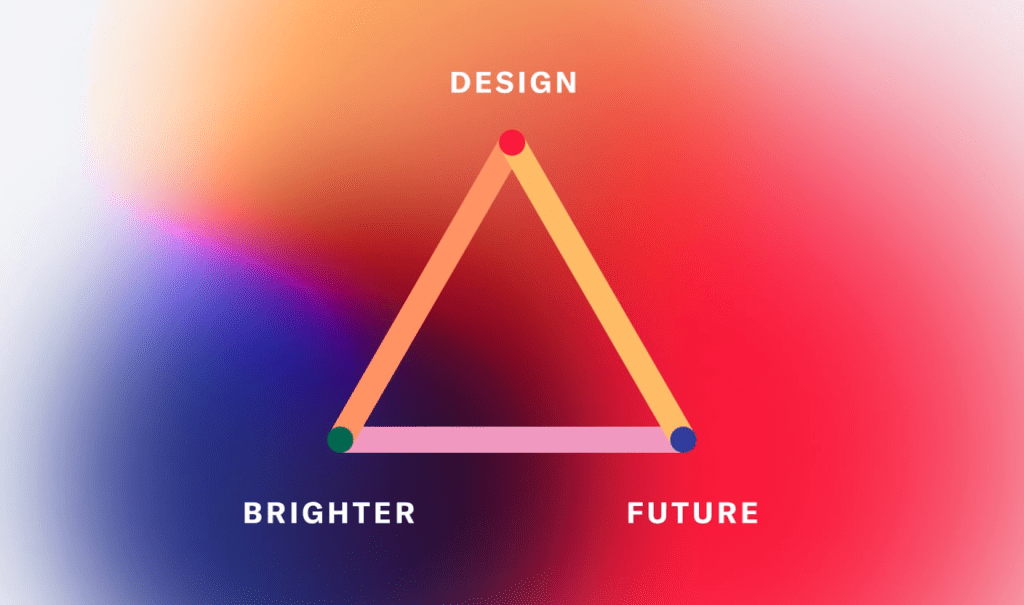
When it comes to visual design, always be one step ahead. Using a tool like design fiction can help you imagine and shape future possibilities. Rather than focusing only on what’s practical now, design fiction dives into “what if” scenarios to spark new ideas.
As Ellen Lupton explains in Design is Storytelling, “Design fiction employs speculative products and prototypes to anticipate future trends or propose visionary solutions to vexing problems,”. It brings together storytelling, creativity, and a bit of sci-fi to make us think about what the world might look like in the years to come.
While traditional design often focuses on solving immediate problems, design fiction looks ahead, visualizing how products, spaces, and experiences could evolve. It’s a helpful way for designers, businesses, and even communities to prepare for changes in technology, the environment, and society.
How Design Fiction Connects to Visual Design
Design fiction often inspires new styles and trends by imagining future environments and objects. Think of how sci-fi movies have influenced design—whether it’s the neon-lit cities in Blade Runner or the run-down factions in Divergent. These worlds help shape today’s design trends with bold colors and futuristic layouts, giving us a taste of what could come next.
Visual designers take these ideas and apply them to things we see in everyday life. From websites to branding, they create designs that give people a glimpse into the future, using aesthetics that feel fresh and forward-thinking.
Using Design Fiction to Address Real-World Issues
Design fiction also lets designers tackle big issues through visual storytelling. Many create futuristic scenarios based on today’s challenges, like climate change or social inequality, to make these concepts easier to understand and connect with emotionally.
One example is Mitigation of Shock by Superflux, which envisions a home adapted to a climate-impacted world. In this fictional setup, people live with limited resources, relying on indoor farming and energy-efficient devices. Each detail—from the food stored to the way it’s prepared—shows us a possible way of living in a rapidly changing environment.
Quentin Delamotte in his article How Design Fiction Will Shape the Future of the Advertising Industry, explores how design fiction is transforming branding and advertising. He discusses how brands are now using speculative narratives to look at future social and cultural impacts. This approach allows companies to think beyond traditional advertising and develop sustainable, socially responsible strategies that align with their broader goals.
The Thing From the Future

I recently had the chance to try design fiction through The Thing from the Future, a game that encourages players to imagine and design future scenarios. In one round, I was tasked with designing a logo centered around agriculture with a hundred-year perspective. This led me to create a fictional farm logo dating back to 1924, where the highlight was a pumpkin that had grown to the size of a house over the years.
Making this logo allowed me to think creatively and push my design skills to visualize something grounded in history yet set in the future. I focused on using colors and styles that could represent durability over time. Visualizing this logo allowed me to tap into my storytelling skills and think forward.
Why Design Fiction Matters
Design fiction is more than just imagination—it’s a way to prepare for change. By visualizing possible futures, designers help people think about what might be around the corner and how they can even start adapting to it now.
Visual design plays a huge role in making these ideas relatable and engaging. Imagining futuristic cities or new products that solve emerging challenges brings abstract concepts into something real and tangible. Design fiction helps us realize that the future isn’t far-off or uncertain—it’s something we can start shaping today.
References
Lupton, E. (2021). Design is storytelling. Cooper Hewitt, Smithsonian Design Museum.
Mitigation of shock (Singapore). Superflux. (2023, January 23). https://superflux.in/index.php/work/mitigation-of-shock-singapore/#
The power of design fiction in advertising and branding: Dentsu X. dentsu X | Your First Choice For Branding & Marketing. (n.d.). https://www.dxglobal.com/insights/how-design-fiction-will-shape-the-future-of-the-advertising-industry/
 Nicole Calabrese's Blog
Leave a comment