
When it comes to podcasting, finding the right balance between planning and fun is key to creating engaging content. There are plenty of techniques and tools available to make the process smoother whether that’s strengthening your tech skills or creating a script that feels like natural conversation with an old friend.
Readings and Writings – My Takeaways
The Bare Bones Camera Course for Film and Video
In Chapter 8 of Tom Schroeppel’s The Bare Bones Camera Course for Film, Schroeppel breaks down the principles of editing and cutting scenes for film and video. He emphasizes the importance of using cuts to enhance storytelling rather than just connecting footage. Every cut should have a purpose, whether it’s to maintain continuity, reveal information, or heighten emotion.
When it comes to a podcast, editing should be a smooth and seamless viewing experience. Cuts and other forms of editing should feel “invisible” to the audience, allowing them to focus on the story without being distracted.
How to Write an Invisible Script
The article How to Write an Invisible Script by Kevin Anderson explains that an “invisible script” is one that doesn’t feel scripted. The listener should feel like they’re hearing a natural conversation, not something planned word-for-word.
The writer should know their topic well enough to improvise while still having a basic outline. Avoid complex language and using natural speech patterns, this will make the podcast feel like a relaxed, engaging conversation rather than a formal presentation.
Podcast Scripting: How Do I Write a Podcast Script?
In Colin Gray’s article: Creating a Great Podcast Script: 3 Methods Top Podcasters Use, he explains different types of podcast scripts, from fully scripted shows to bullet-point outlines. Gray highlights the importance of finding a balance between structure and flexibility.
Fully scripted podcasts can feel stiff, while too much improvisation can cause the podcast to feel disorganized. Start with an outline, then decide which parts need to be scripted in detail. Knowing when to stick to the script and when to ad-lib can make a podcast more engaging for the listener.
Hooks, Taglines, and the Power of Words
Kevin Anderson explains in his article Podcast Taglines, Hooks, & the Power of Words, that hooks and taglines can draw listeners in and keep them interested. A good hook grabs attention right away, while a catchy tagline helps people remember the podcast. The key is to use clear, simple language that resonates with the audience.
Whether it’s a clever phrase or a thought-provoking question, the words should create curiosity and make people want to hear more. The power of words lies in their ability to connect emotionally with listeners, making the podcast stand out.
Tools for Podcast Planning Perfection
Matthew McLean shares in his article Best Podcast Tools of 2024: Make, Market, & Monetize Your Show, how various tools that can help with podcast planning and production. Some tools mentioned include apps for scriptwriting, scheduling, and editing audio.
Using planning tools to stay organized and reduce stress during the podcast creation process is vital. By having a clear structure and using technology to manage tasks, podcasters can focus more on content and less on logistics.
How to Present a Perfectly Scripted Podcast
The article Podcast Presentation Skills | Honing Your Speechcraft by Robert Cudmore, provides tips on how to present a podcast in a way that sounds natural even if it’s scripted. It emphasizes the importance of practicing and refining the script until it flows smoothly.
Reading aloud beforehand and making small adjustments to the script can help make it sound more conversational. The goal is to avoid sounding robotic or overly rehearsed, instead aiming for a delivery that feels genuine and engaging to the listener.
Overall, creating a podcast or video that feels polished yet natural takes practice and the right tools. With a clear plan, the right technology, and a focus on delivering content that feels authentic, podcasters and video creators can grab their audiences attention while keeping their workflow organized and efficient.
Research to Inform – A Few of My Favorite Podcasts
Anything Goes by Emma Chamberlain
Anything Goes is a conversational podcast where Emma Chamberlain talks candidly about life, mental health, and personal experiences. What makes this podcast well-produced is its intimate and unscripted feel, giving listeners the sense that they’re having a private conversation with Emma.
The loose, relaxed format flows naturally from topic to topic, keeping the audience engaged through Emma’s relatable and honest approach. The use of minimal editing enhances its authenticity, making listeners feel like they’re in the moment with her.
Therapuss with Jake Shane
Therapuss is a humor-based podcast where Jake Shane mixes comedy with heartfelt advice. Its success lies in Jake’s ability to act as a “therapist” but also shift between lighthearted banter, creating a well-rounded listening experience.
The format often combines pre-planned segments with fun interactions featuring a new guest each week, giving it a dynamic flow. Jake’s comedic timing and conversational style help keep the audience entertained, while the balance of humor and advice adds depth to each episode.
Additionally, he engages his audience during his main segment where his fans can write to him about the troubles they are having, and jake and his guest will answer it or even call the fan. Fostering interactions like this helps to drive views, loyalty, and engagement.
Crime Junkie by AudioChuck
Crime Junkie uses a structured, narrative-driven format that captivates its audience with well-researched true crime stories. They use a specific piece of music in their podcasts, which allows users to immeditley identify a Crime Junkie podcast when listening. Each episode is planned thoroughly and organized extremely well, with hosts Ashley Flowers and Brit Prawat discussing cases in a detailed yet easy-to-follow manner.
They also upload images and videos they reference to their website for users to follow along. The podcast’s use of suspense and storytelling techniques, such as cliffhangers and dramatic pacing, keeps listeners on edge.
The Broski Report with Brittany Broski
The Broski Report combines humor, social commentary, and pop culture insights, with Brittany Broski’s distinct personality driving the show. The podcast flows effortlessly as Brittany moves between playful jokes and deeper discussions, creating a balance that keeps the audience engaged.
The casual, chatty format feels inviting, making listeners feel like they’re tuning in to a fun, relatable conversation. The energetic pacing and Brittany’s comedic delivery makes this podcast entertaining. She even has segments with special guests where they dress up in different costumes and chat in different background settings.
Create – My Podcast
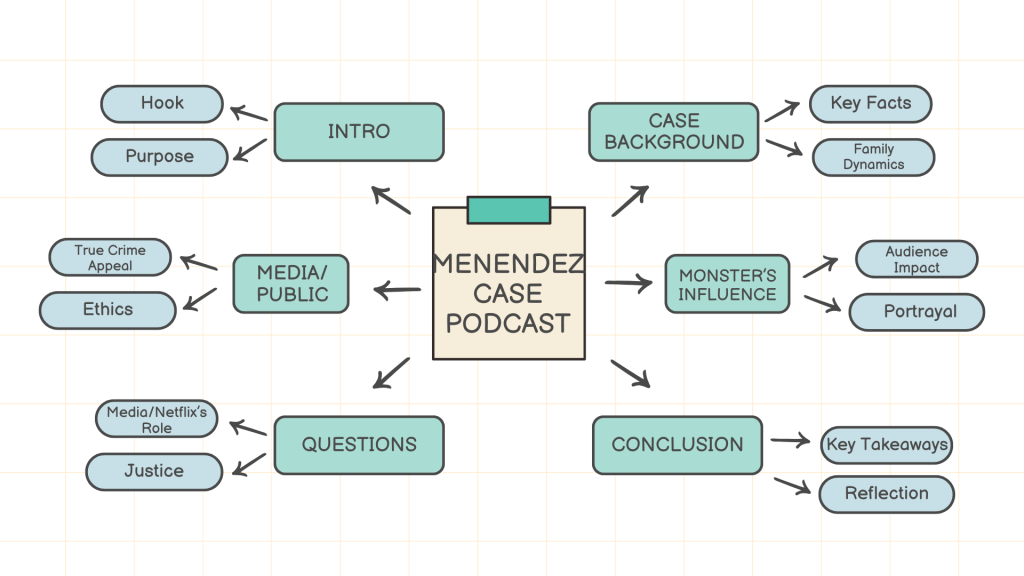
When tasked with creating my own podcast episode, I knew it had to be about pop-culture. My studies over the past 4 years have revolved around pop-culture and keeping up with it is something I find incredibly entertaining.
So, I chose to create a podcast episode on the Menendez case and the impact Netflix’s Monsters series had on it. It’s a story that goes beyond just true crime—it touches on issues of justice, family, and our fascination with real-life tragedies.
This case, decades later, still raises tough questions about guilt, innocence, and why we keep revisiting these dark stories. The new show brings the Menendez brothers’ story to a modern audience, challenging us to think deeper about what we’re watching and why it entertains us.
One big challenge will be finding the right tone. It’s important to respect the real people involved and not turn this into just another crime story. I want to encourage listeners to question the impact of telling these stories over and over.
My goal is to make this episode thought-provoking and relatable, giving listeners something to think about long after they finish listening.
View my work below:
References
Anderson, K. (2021, January 13). The art of creating an invisible podcast episode script. The Podcast Host. https://www.thepodcasthost.com/planning/the-invisible-podcast-script/
Anderson, K. (2024, June 14). Podcast taglines, hooks, & the power of words. The Podcast Host. https://www.thepodcasthost.com/planning/hooks-taglines-power-of-words/
Cudmore, R. (2023, October 13). Podcast presentation skills: Honing your speechcraft. The Podcast Host. https://www.thepodcasthost.com/presenting-your-podcast/podcast-presentation-skills/
Gray, C. (2024, January 10). Creating a great podcast script: 3 methods top podcasters use. The Podcast Host. https://www.thepodcasthost.com/planning/podcast-scripting/
McLean, M. (2024, July 3). Best podcast tools of 2024: Make, market, & monetise your show. The Podcast Host. https://www.thepodcasthost.com/planning/best-podcast-tools/
Schroeppel, T. (2018). The Bare Bones Camera Course for film and video.
 Nicole Calabrese's Blog
Leave a comment