
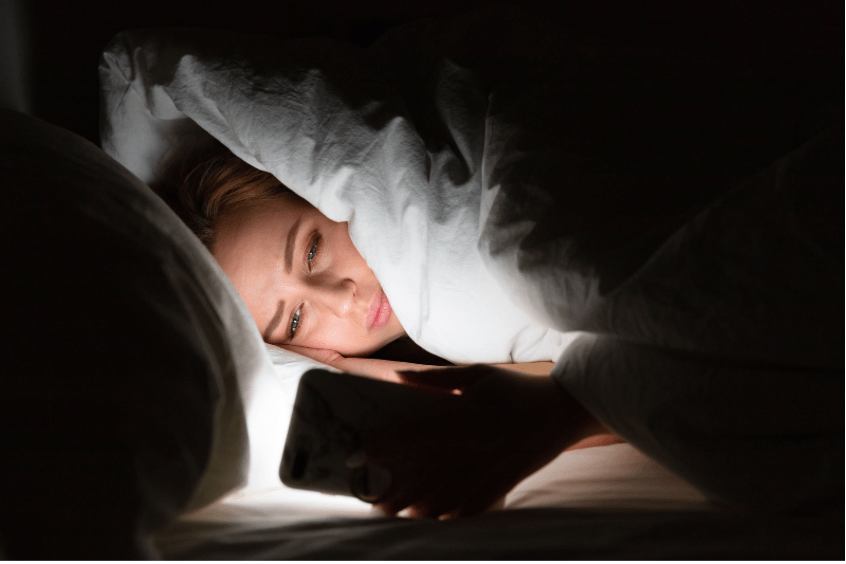
Have you ever found yourself lying in bed, staring at the ceiling, unable to fall asleep? You’re not alone.
Sleep deprivation is becoming more common, and it’s no surprise given our fast-paced, tech-driven lives. It’s having a massive impact on our ability to focus, function, and maintain mental health.
One of the main reasons we struggle with sleep is our exposure to screens and artificial light.
Think about it—how often do you scroll through your phone or watch TV right before bed? This habit keeps our mind up and running making it harder to wind down and fall asleep.
The consequences of sleep deprivation are significant. When we don’t get enough rest, our bodies cannot function properly. We become more irritable, our attention spans shorten, and our mental health declines.
It’s not just about feeling groggy; chronic sleep deprivation can lead to serious health issues like anxiety and depression.
So, what can we do about it?
Here are a few tips for putting down your phone and picking up some hours of sleep:
Try to turn off all screens at least an hour before you plan to sleep. This allows your body to start producing melatonin naturally.
Keep your bedroom cool and dark. Consider blackout curtains and removing any sources of artificial light.
Going to bed and waking up at the same time every day helps regulate your body’s internal clock.
Use dim, warm lighting in the evening to signal to your body that it’s time to wind down.
Keep phones and other devices out of the bedroom or even in your nightstand to reduce the temptation of late-night scrolling.
By making these adjustments, you can improve your sleep quality, leading to better focus, mood, and overall well-being.
Remember, good sleep is a foundation for a productive and healthy life. So, put down your phone, dim the lights, and prioritize your rest.
 Nicole Calabrese's Blog
Leave a comment